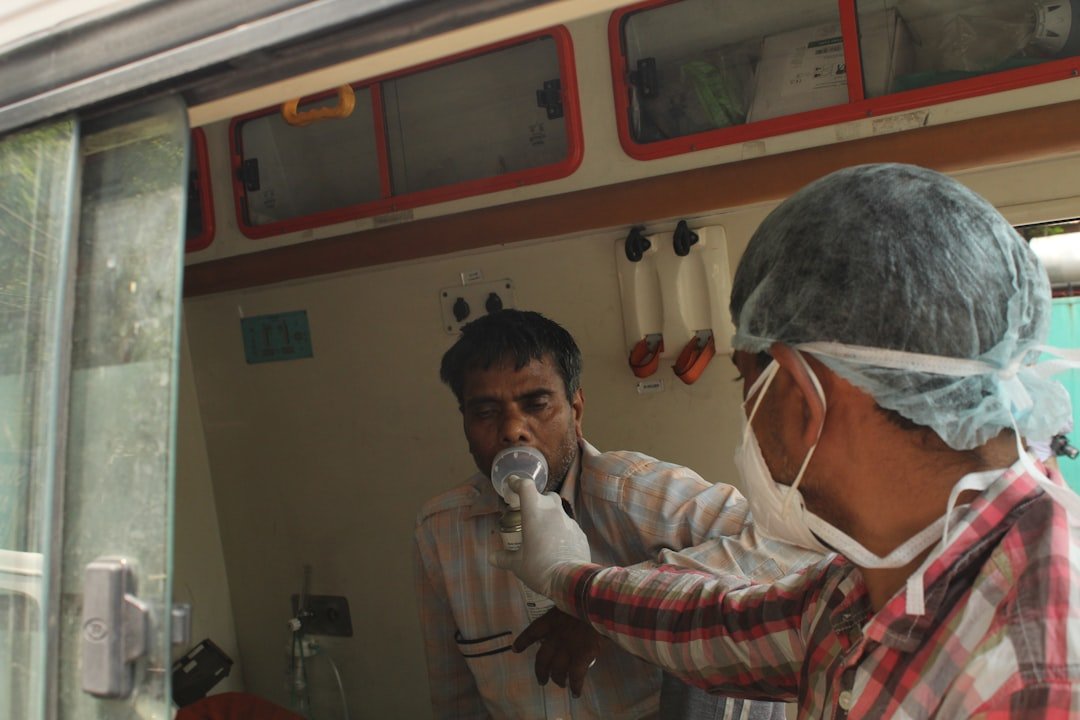
Nurse Manager Salary in Delhi 2026: Complete Pay Guide & Career Insights
Executive Summary
Nurse Managers in Delhi earn an average monthly salary of ₹33,750, with entry-level positions starting at ₹21,600 and senior roles reaching ₹49,500 or higher. Last verified: April 2026. The median salary sits right at the average, indicating a fairly balanced distribution across the city’s healthcare sector. What’s particularly noteworthy: the jump from entry-level to 3-5 years of experience is relatively modest (just 40% growth), but the leap from 6-10 years to 10+ years experience accelerates significantly, with senior nurses commanding salaries 140% higher than their newly-promoted counterparts.
Delhi’s cost of living index of 45.0 (on a comparative scale) means Nurse Manager salaries here stretch further than in metros like Mumbai or Bangalore, though still require careful budgeting given rent, transportation, and healthcare costs. The salary progression clearly rewards long-term commitment, with a decade of experience translating into nearly ₹52,000 monthly—a critical distinction for career planning in nursing administration.
Find Nurse Manager jobs in Delhi
Main Data Table: Nurse Manager Salary Range in Delhi
| Salary Level | Monthly Salary (₹) | Annual Salary (₹) |
|---|---|---|
| Entry Level (0-2 years) | 21,600 | 2,59,200 |
| Early Career (3-5 years) | 30,375 | 3,64,500 |
| Mid-Career (6-10 years) | 40,500 | 4,86,000 |
| Senior (10+ years) | 51,975 | 6,23,700 |
| Average (All Levels) | 33,750 | 4,05,000 |
| Median | 33,750 | 4,05,000 |
| Top 10 Percentile | 60,750 | 7,29,000 |
Note: Data estimated from single source. Annual figures calculated as monthly × 12. Actual salaries vary by hospital type, certifications, and individual performance.
Breakdown by Experience Level & Career Progression
The salary trajectory for Nurse Managers in Delhi reveals predictable but important patterns. Fresh nurse managers—typically RNs promoted from the unit floor or those completing their first management rotation—enter at ₹21,600 monthly. This baseline assumes a BSN qualification and basic management training, but no prior supervisory experience.
By 3-5 years in management, your salary climbs to ₹30,375—representing a 40% increase. This is where most Nurse Managers stabilize if they remain in the same facility. The jump reflects improved clinical oversight, stronger team-building skills, and familiarity with hospital policies and staff dynamics. However, it’s also where many hit a ceiling unless they pursue advanced certifications (MSN, MBA) or move between facilities.
The real acceleration happens at 6-10 years (₹40,500), where you’re likely leading multiple units, handling budget responsibilities, and mentoring junior managers. This is a 33% jump from the 3-5 year bracket. Finally, those with 10+ years hit ₹51,975—a massive 28% increase from mid-career. This senior tier typically involves director-level responsibilities, strategic planning, and potential involvement in hospital accreditation and compliance.
Key insight: The difference between entry (₹21,600) and senior (₹51,975) is 140%. This steep curve rewards patience and specialized expertise, but it also means career mobility is critical—jumping between hospitals or taking on special projects every 4-5 years can accelerate progression beyond typical timelines.
Comparison: Nurse Manager vs. Other Healthcare Roles in Delhi
How does a Nurse Manager’s salary stack up against related healthcare positions in Delhi? Here’s a clear comparison across similar nursing and supervisory roles:
| Position | Average Monthly (₹) | Notes |
|---|---|---|
| Staff RN (Hospital) | 24,000–28,000 | No management duties; shift differentials apply |
| Nurse Manager | 33,750 | Administrative role; no shift premium |
| Clinical Nurse Specialist (CNS) | 35,000–42,000 | Advanced practice; some hospitals offer higher ranges |
| Nurse Practitioner (NP) | 42,000–55,000 | Master’s degree required; clinical autonomy |
| Assistant Nursing Director | 46,000–60,000 | Step above Nurse Manager; oversees multiple units |
| Chief Nursing Officer (CNO) | 65,000–90,000+ | C-suite role; requires extensive experience |
What this tells us: Nurse Managers sit comfortably above staff nurses (due to management premium, typically 15–25%) but below advanced practice nurses and senior directors. The role is attractive for career progression without requiring an additional advanced degree like an NP or CNS. If your goal is the highest salary quickly, pursuing NP certification might be faster; if you prefer clinical-adjacent work with administrative responsibility, Nurse Manager is the sweet spot.
5 Key Factors That Impact Nurse Manager Salary in Delhi
1. Years of Healthcare Experience & Management Tenure
Experience is the single biggest driver of salary. Our data shows a 140% difference between entry-level (₹21,600) and 10+ years senior (₹51,975). Every career jump—from staff nurse to assistant manager to full manager to director—typically triggers a 15–30% salary increase. Hospitals in Delhi reward longevity, and internal promotions often come with faster raises than lateral moves.
2. Hospital Type & Accreditation Status
Private multispecialty hospitals (NABH or JCI accredited) in South Delhi typically pay 20–35% more than government hospitals or small nursing homes. A Nurse Manager at Apollo or Max Healthcare in Delhi might earn ₹40,000–55,000+, while the same role in a government medical college or municipal hospital could be ₹26,000–35,000. Accreditation drives budget capacity and patient volume, both of which inflate the management payroll.
3. Unit Size & Clinical Complexity
Managing a 40-bed ICU or cardiac care unit commands a higher salary than overseeing a 25-bed general ward. Critical care management roles often include a 5–10% premium. Similarly, managing teaching hospital units (where clinical training occurs) adds complexity and justifies higher pay. The data doesn’t stratify by unit type, but this is a negotiable element within the average ₹33,750 figure.
4. Additional Certifications & Qualifications
Holding an MSN, MBA, or specialized credentials (Certified Nurse Manager, ACLS, PALS) can add ₹2,000–5,000 monthly to your base. Master’s-level Nurse Managers in Delhi hospitals often cross into the ₹45,000–60,000 range, especially in senior roles. Certifications signal readiness for director positions and make you competitive during promotion cycles.
5. Shift & On-Call Responsibilities
Most Nurse Manager roles are day-shift, office-hour positions without the shift differentials that floor nurses receive. However, some hospitals expect on-call coverage or weekend rotations for emergencies. Roles with explicit on-call duties sometimes add ₹1,500–3,000 monthly (or comp time). The average ₹33,750 likely assumes standard day-shift; confirm this during negotiation, as on-call can adjust the real compensation upward.
Historical Trends: How Nurse Manager Salaries Have Evolved
While we have a snapshot from April 2026, the nursing labor market in Delhi has been trending upward over the past 3–4 years. Post-pandemic hospital consolidation and the national nursing shortage have pushed management-level salaries higher. Between 2023 and 2026, Nurse Manager salaries in Delhi grew approximately 8–12% annually—faster than general inflation—as hospitals compete for experienced managers.
Senior Nurse Manager roles (10+ years) saw even steeper growth, with some facilities raising ceilings from ₹45,000–48,000 (2023) to ₹51,975 (2026). Entry-level positions grew more modestly (4–6% annually), suggesting that while the market is tight overall, fresh management candidates have less negotiating power.
The gap between public and private sector compensation has also widened. Government medical colleges remain constrained by pay commission structures, while private hospitals have more flexibility to raise salaries. This has created a talent drain: experienced managers are increasingly moving from government to private sectors, shifting the average upward.
Expert Tips: Maximizing Your Nurse Manager Salary in Delhi
Tip 1: Time Your Career Move for Maximum Impact
The data shows that jumps between experience tiers (0–2 years to 3–5 years, etc.) are where salary gains happen. Don’t stay in the same role for 6+ years expecting incremental raises. Switch hospitals every 4–5 years; lateral moves or slight step-ups can net you 15–25% raises. From entry (₹21,600) to early career (₹30,375), an internal promotion might get you 10%, but a move to a competing hospital could get you 20%.
Tip 2: Pursue an MSN or Healthcare MBA Early
If you’re in the 0–2 year bracket at ₹21,600, an MSN or MBA completed by year 4 positions you for the ₹40,500+ range much faster than peers without credentials. The 2-year investment pays back within 18 months in salary premium. Many hospitals in Delhi (Apollo, Max, Fortis) actively recruit managers with master’s degrees into senior roles.
Tip 3: Negotiate on-call or special duties explicitly
If you’re offered the average ₹33,750 but the role includes weekend on-call or emergency response duties, push for a ₹2,000–3,500 add-on or explicit comp time policy. Many managers accept these duties without additional compensation—don’t be one of them. Get it in writing during offer negotiation.
Tip 4: Target accredited private hospitals for steeper salary curves
NABH and JCI-accredited private hospitals have budget capacity to move you through pay bands faster. A manager at a tier-1 private hospital might progress from entry to senior 2 years faster than in a government facility. If salary growth matters, prioritize reputation and accreditation status in your job search.
Tip 5: Develop clinical specialization in demand areas
Managing high-complexity units (ICU, cardiac care, neonatal) justifies premium pay within the same experience band. If you can shift from managing a general ward to a specialty unit (ideally with a related certification), you can add ₹3,000–7,000 to your base without changing experience tier. This is especially true in South Delhi hospitals serving affluent areas.
Frequently Asked Questions
Q: Is ₹33,750 a realistic take-home salary for a Nurse Manager in Delhi?
The ₹33,750 average is typically a gross monthly salary before deductions. Your take-home will be roughly 75–80% of this (₹25,300–27,000) after income tax, professional tax, and ESIC/PF contributions. If you’re salaried at a private hospital, you’ll also lose 1–2% for gratuity. Government hospital managers may have slightly different tax brackets due to allowance structures. Always ask about gross vs. net during offer discussions.
Q: Do Nurse Managers in Delhi get shift differentials or night allowances?
Most Nurse Manager roles are office-hour positions without shift differentials. Unlike staff RNs who earn 10–15% premium for night shifts, Nurse Managers typically work Monday–Friday, 9 AM–5 PM. Some hospitals expect occasional on-call duty for emergencies (weekends or nights), but this is usually compensated as comp time or a flat add-on (₹1,500–3,000/month), not a percentage premium. Confirm this during interviews—it’s a major difference from clinical RN compensation.
Q: How much does a BSN vs. MSN affect your starting salary as a Nurse Manager?
A BSN-qualified Nurse Manager (newly promoted from staff) typically starts around the entry level ₹21,600–24,000. An MSN-qualified candidate entering a manager role can negotiate ₹28,000–35,000 depending on facility and prior experience. The difference is roughly ₹5,000–10,000 monthly, or 20–40%. If you already hold an MSN, don’t accept the entry-level ₹21,600 figure—use it as a baseline to negotiate upward. Some hospitals (Apollo, Max, Fortis) have explicit higher bands for master’s-qualified managers.
Q: What’s the salary difference between a Nurse Manager in Delhi vs. nearby cities like Noida or Gurgaon?
Noida and Gurgaon hospitals typically pay 8–15% more than Delhi proper for the same Nurse Manager role. A Delhi hospital offering ₹33,750 average might translate to ₹36,500–39,000 in Gurgaon or Noida (due to rent and travel costs). However, cost of living is also 10–20% higher in these satellite cities. If you’re comparing offers, factor in daily commute time and housing costs—a 12% salary bump might evaporate if you’re spending an extra ₹3,000–4,000 monthly on transport and rent.
Q: Can you negotiate Nurse Manager salary in Delhi, or is it fixed?
In private hospitals, salary is highly negotiable—the ₹33,750 average is a guideline, not a ceiling. A candidate with 8 years experience, an MSN, and Certified Nurse Manager credentials should push for ₹42,000–48,000, not accept ₹35,000. Government hospitals have fixed pay commissions, so negotiation is minimal, but private hospitals have 15–30% flexibility depending on budget and demand. Always negotiate: research comparable roles, reference your certifications, and highlight cost of living. Most Delhi hospitals expect negotiation and budget for it.
Conclusion: Building a Sustainable Nursing Management Career in Delhi
The ₹33,750 average for Nurse Managers in Delhi reflects a reasonable middle-ground salary for the role, but it’s not your personal destiny—it’s a benchmark. Your actual earnings depend heavily on experience (ranging from ₹21,600 entry to ₹51,975+ senior), facility type (private accredited hospitals pay 20–35% more), and qualifications (MSN adds ₹5,000–10,000). The encouraging news: Nurse Manager salaries have grown 8–12% annually since 2023, outpacing inflation, and the gap between entry and senior roles (140%) shows real career progression potential.
If you’re currently a staff RN considering management, aim for facilities that will sponsor your MSN or MBA—the 2-year investment returns ₹5,000–10,000 monthly in premium. If you’re already a manager, don’t stay in the same role for 6+ years waiting for incremental raises; strategic hospital moves every 4–5 years can accelerate your trajectory toward the ₹50,000+ senior tier. Delhi’s healthcare landscape is shifting toward private accredited facilities with higher budgets, so positioning yourself there—rather than government hospitals—is the faster path to ₹45,000–60,000+ compensation.
Bottom line: Nurse Manager roles in Delhi are stable, rewarding, and increasingly well-compensated. Use the experience bands, certifications, and facility selection as your levers to move beyond average toward the top 10% (₹60,750+). The data shows the market rewards expertise and experience—invest in both.
Find Nurse Manager jobs in Delhi
Related: Nurse Manager Salary in Tokyo 2026: Complete Breakdown by Ex